
HTTP, WebSocket, and TCP routing
Route by hostname, path, method, or header. Proxy WebSockets over HTTP and raw TCP services through dedicated listeners.
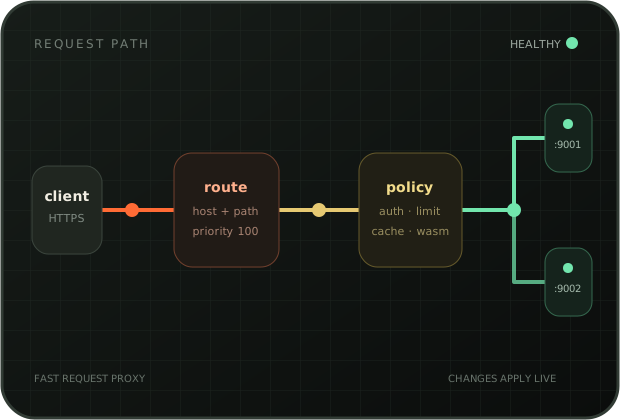
Raahi sits in front of your applications and sends each request to the right upstream. It handles certificates, health checks, policy, and traffic distribution in one service.
Route and policy changes take effect without restarting the proxy.
HTTP, WebSocket, and TCP routing
Route by hostname, path, method, or header. Proxy WebSockets over HTTP and raw TCP services through dedicated listeners.
TLS without certificate chores
Serve the right certificate for each hostname. Issue and renew certificates through Let’s Encrypt, ZeroSSL, or another ACME provider.
Traffic policy at the proxy
Add API keys, Basic auth, JWT verification, ACLs, IP rules, rate limits, CORS, redirects, caching, compression, and request transforms.
Load balancing and safe rollouts
Remove unhealthy targets, balance requests across backends, and shift a percentage of traffic to a canary service.
A service describes an upstream application. Targets are the servers behind it. A route decides which requests reach the service. Plugins add authentication, limits, caching, transforms, and other policy.
request -> route -> policy -> load balancer -> healthy target